Most of New York's major museums can be seen without paying full price. Some set aside free hours or days. Others let you decide what a ticket is worth. The catch is that every institution writes its own rules, the rules change, and the ticket counter rarely volunteers them.
This guide explains the three main doors — scheduled free admission, pay-what-you-wish, and the discount routes people forget — and how to use them without turning a museum trip into an accounting exercise. The one habit that matters most: check the museum's own admissions page before you go, because policies and hours shift more often than any third-party listing catches up with.
What are free museum days, and how do they work?
A free day or free hour is exactly what it sounds like: a window when general admission costs nothing. Museums offer them for a mix of reasons — public funding agreements, corporate sponsorships, community commitments, and the plain fact that a gallery full of people at 6 p.m. on a Friday looks better in an annual report than a gallery half empty. Readers following this should also see A First-Friday Gallery Walk in Bushwick.
The trade-offs are real. Free windows are usually the most crowded, and they often fall on weekday evenings when you are tired. Special exhibitions are frequently excluded, so the show you actually came for may still carry a separate ticket. And some free programs require advance reservation, which means the free slot can book out before the paid ones do.
The practical move is simple. Decide which collection you want to see, not which show. If it's the permanent collection — the rooms that stay put year after year — a free evening is the best deal in the city. If it's a blockbuster special exhibition, free admission probably won't cover it, and you should plan around that before you arrive.
How does pay-what-you-wish admission actually work?
Pay-what-you-wish means the posted price is a suggestion, not a floor. You walk up, you name an amount, you get a ticket. At some museums this applies to everyone at all times. At others it applies only to certain hours, or only to residents of New York State, with proof of address requested at the counter.
Two things trip people up. First, the suggested donation is displayed in large type and the pay-what-you-wish line is displayed in small type, or not at all — you may need to ask. Second, online ticketing systems often don't offer a PWYW option, so the discount exists only at the physical counter. Buying ahead for convenience can quietly cost you the very discount you came to use.
How much should you give? That is your call, and the museum is not grading it. What our analysis of how these programs are structured suggests: pay-what-you-wish exists because institutions want visitors who would otherwise stay home. A dollar honored honestly is worth more to that goal than a skipped visit. If you can pay full price and the visit matters to you, doing so supports the conservation and education staff whose work you are about to enjoy — but that is a value judgment, not a rule.
Which discounts do people forget?
Beyond free days and PWYW, several quieter routes exist, and they vary by institution:
- Library passes. Many public library systems lend museum passes the way they lend books. This is the single most underused deal in the city, and it costs nothing.
- Bank and corporate programs. Some credit cards and employers sponsor free weekends or first-month deals at specific museums. Check whatever benefits you already have before buying anything.
- Student, senior, and educator rates. Standard, but only useful if you carry the ID.
- Membership math. If you expect to visit the same museum several times a year, a membership can beat per-visit tickets — but only you can run that arithmetic against your own habits.
- Free-always institutions. Smaller museums, artist-run spaces, and most commercial galleries charge nothing at all, any day they are open.
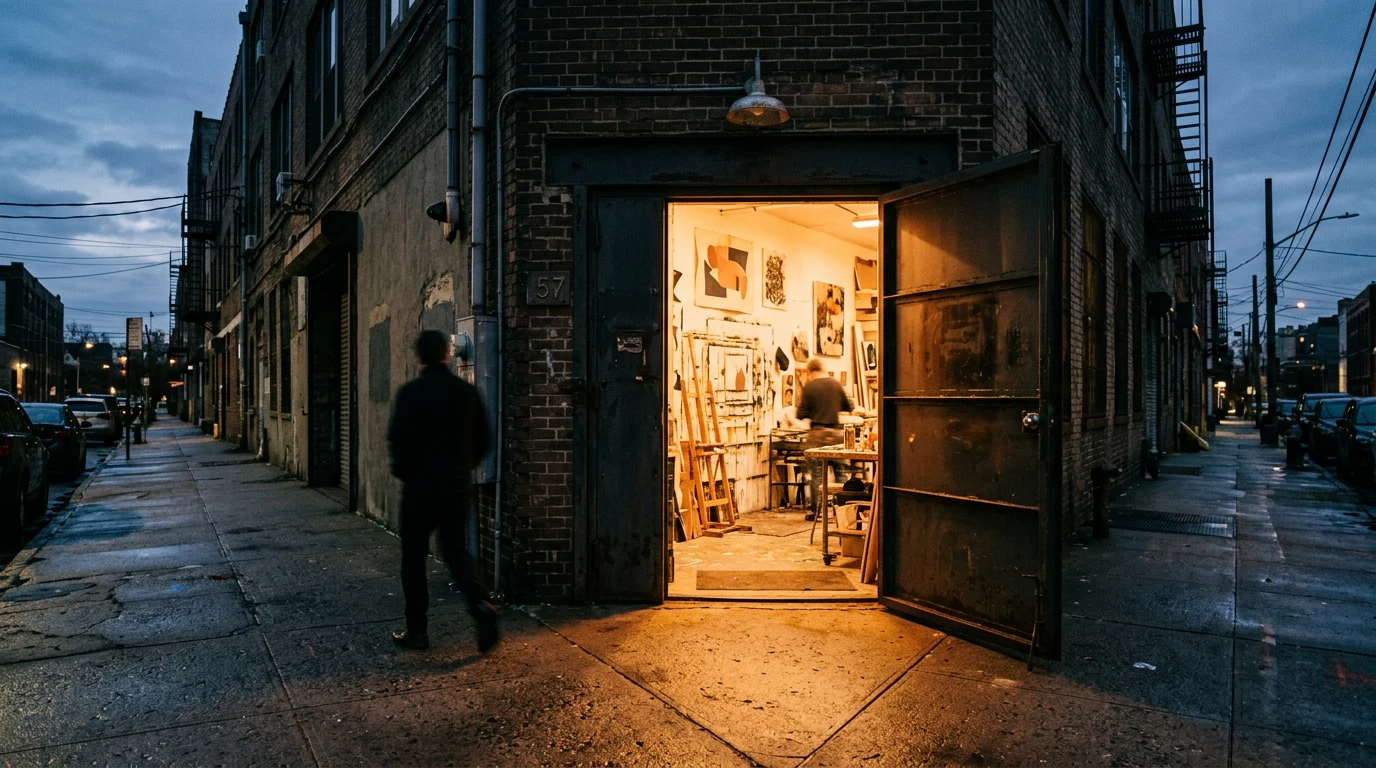
That last point deserves weight. If your interest is contemporary art rather than the encyclopedic collections, the Lower East Side galleries and Bushwick's artist-run spaces cost zero dollars, no reservation, no line. The economics of seeing art in New York are not uniform, and the cheap doors are not all in the same neighborhoods. We covered a connected angle in How Artist-Run Galleries Work in Bushwick.
What this means for how you plan a visit
Free and discounted admission changes not just what you pay but how the visit feels. A crowded free evening rewards a different strategy than a quiet paid morning. If you go in on a free slot, pick two or three rooms and look at them properly rather than trying to sweep the building. Our guide to planning a museum visit you'll actually remember covers that in detail; the short version is that admission price and attention span are unrelated, and a rushed free visit is worth less than a paid one you gave three hours.
A few habits worth keeping:
- Check the museum's official admissions page the week you go, not the month before.
- Confirm whether reservations are required, even for free entry.
- Ask at the counter about same-day discounts; policies live with the staff who enforce them.
- Keep your expectations about crowds calibrated to the deal — the cheapest slot is rarely the calmest.
Why museums offer free admission at all
It helps to understand the incentive, because it predicts where the deals are. Museums sit between two pressures: a mission that says access, and a budget that says revenue. Free hours and PWYW are the compromise — they buy audience diversity and goodwill while letting the institution charge full freight at peak times and for special shows. This is also why the deals concentrate in off-peak hours and why they are advertised inconsistently. A free Tuesday evening the museum can fill is a program; one it can't is a cost. When attendance softens, these programs are among the first things to change.
None of that is cynical. It just means the deals are real but perishable, and the person best positioned to confirm today's terms is the museum itself.
The honest limits of this guide
Here is what we cannot tell you: which museum offers free admission on which day this month, and what each institution's current pay-what-you-wish policy covers. Those specifics change often enough that any fixed list would mislead you within weeks. The evidence this article rests on is structural — how the programs work, where the discounts hide, how to think about what to pay. The current numbers live on each museum's website, and that is where you should get them.
What the evidence does establish is that full price is a starting point, not a requirement. Between scheduled free windows, pay-what-you-wish counters, library passes, and the galleries that never charge anyone anything, a person in New York with more curiosity than money has more ways in than the ticket booth admits. Use them. The art does not care what you paid.
Sources: onlinegames.io