Most museum visits fail the same way. You walk in, grab a map, try to see everything, and leave four hours later with sore feet and no clear memory of a single work. The fix is simple and slightly counterintuitive: plan to see less. A good museum visit is built around one or two rooms you genuinely care about, a real break in the middle, and a hard rule about when to stop.
This guide walks through how to choose your focus before you arrive, how to pace the hours once you're inside, when an audio guide earns its keep, and which wings to skip without guilt. The advice comes from watching how exhibitions are built and how people move through them, not from any single institution's rulebook. And the starting point is modest. Merriam-Webster defines a plan as "a method for achieving an end" or "a detailed formulation of a program of action" — which is exactly what a museum visit needs and rarely gets. According to Merriam-Webster, the word traces back to a ground plan, a drawing of a floor. Fitting. Your visit should start with the floor.
Why do most museum visits blur together?
Because attention is a budget, and most visitors spend it all in the first hour. Museums are arranged as journeys: entrance, highlights, deeper galleries, gift shop. The arrangement is deliberate. Curators build each show so that early rooms set terms and later rooms reward patience. When you sprint, you spend your best attention on the lobby and the famous pieces everyone already knows, and you arrive at the interesting work exhausted.
There's also a physical truth. Standing and walking for hours is labor. Gallery benches exist for a reason. If your feet hurt, your eyes stop working. The people who leave a museum with one painting burned into their memory are usually the people who sat down twice.
Our analysis, after walking exhibitions the fast way and then the slow way for years: the fast pass tells you what a show looks like. The slow pass tells you what it means. Plan for the slow pass from the start.
How do you choose which wings to see — and which to skip?
Pick before you go, not at the ticket counter. Most museums publish their floor plans online. Look at the map for five minutes and ask one question: what is the one thing I would be sorry to miss? Not three things. One. If the answer is a specific exhibition, build the visit around it. If the answer is a permanent collection wing, build around that.
Then choose a second area as a fallback, in case the first is closed, crowded, or thinner than expected. Everything else is optional. This is the part that feels wrong, because you paid admission and skipping a wing feels like wasting money. It isn't. The ticket buys the visit you actually have, not the one you fantasize about at the entrance.
A useful trick: enter through the collection, not the blockbuster. If a special exhibition is the draw, spend twenty minutes in a quieter permanent gallery first. It calibrates your eye. Walking straight into a packed headline show is like reading the last chapter first.
Skipping is a skill. Large encyclopedic museums contain centuries of material, and no one can give honest attention to all of it. Decide what you're skipping on purpose — say it out loud, even: "We're doing the photography galleries and one sculpture court, nothing else." A stated plan survives contact with the gift shop. A vague one doesn't.
What's the right pace once you're inside?
Think in blocks of about forty-five minutes, with a real break between blocks. A workable shape for a two-and-a-half-hour visit:
- Block one (45 minutes): your chosen focus. Slow looking. Sit on the bench in the middle of the room and let the works come to you. Read the wall labels of the pieces that hold you, skip the ones that don't.
- Break (15–20 minutes): café, courtyard, bench with a view. Leave the galleries entirely. This is where memory consolidates — you're not being sentimental by resting, you're being efficient.
- Block two (45 minutes): the fallback area, or a return to one piece from block one that you can't stop thinking about. Returning to a single work for a second, longer look is the single highest-value move in museum-going.
- The last stretch (20 minutes): whatever pulls you. Wandering with no agenda at the end of a visit often surfaces the best surprises, because your judgment is warmed up and your obligations are done.
Within a block, resist the conveyor-belt walk — the steady drift along the walls at uniform speed. Instead, do a fast sweep of the whole room first, then go back to the two or three works that stopped you. Rooms are arranged with a logic: often chronological, sometimes thematic. A quick sweep lets you feel the arrangement before you commit to any single piece.
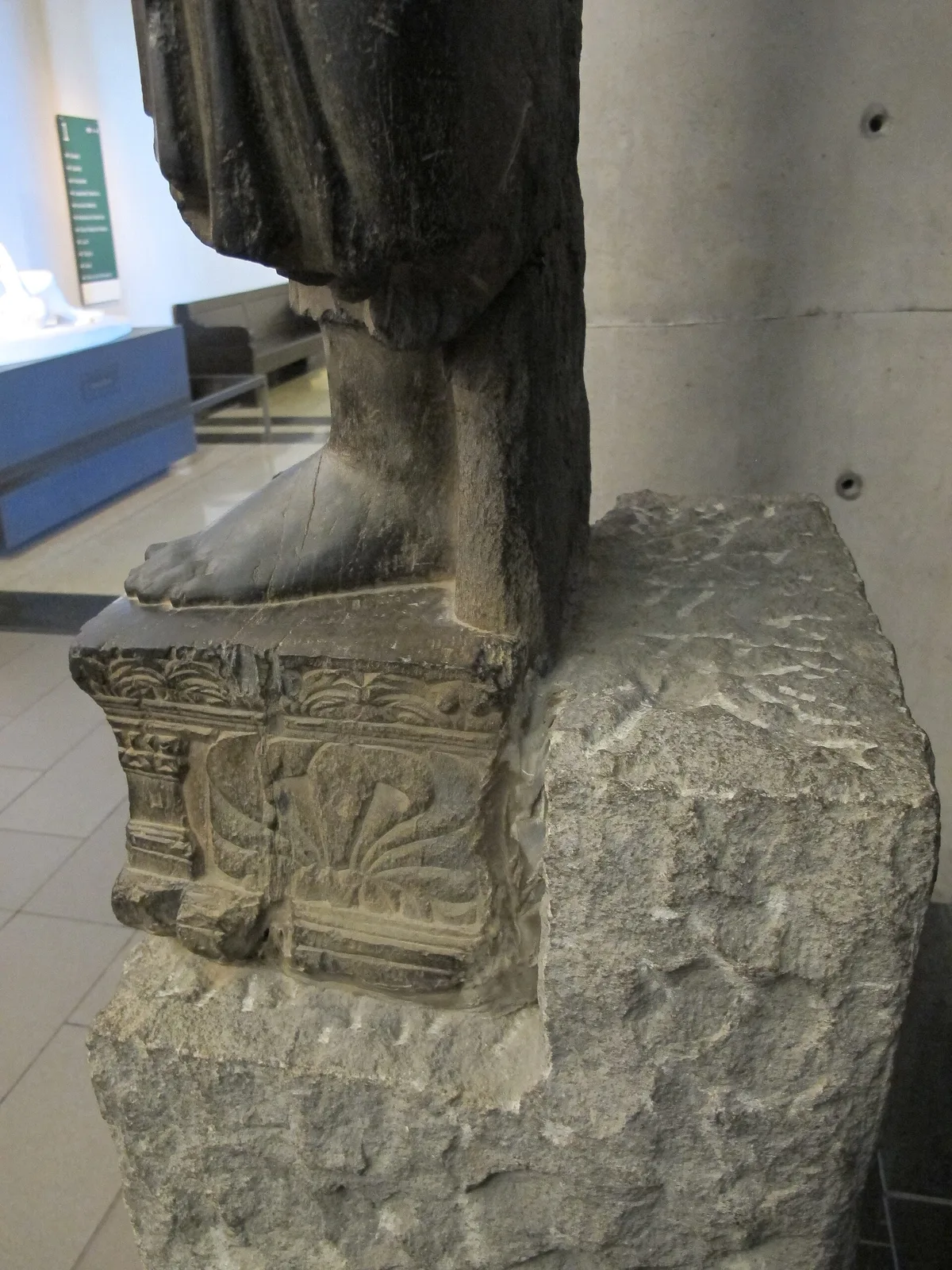
And look at the backs of things when you can. A canvas's stretcher, a frame's construction, the reverse of a panel — these tell you about the object as a made thing, built by hand, shipped, repaired. Museums rarely foreground this, but it changes how a painting reads. If the mechanics of getting works onto walls interests you, it's worth knowing that an exhibition is a construction site before it's a contemplative space — Art Handlers: The Labor Behind the Show follows the people who do that building.
When is an audio guide worth it?
Three cases, roughly. First: dense, text-heavy exhibitions, where a curator's five-minute explanation of a work's history saves you twenty minutes of label-squinting. Second: shows in unfamiliar territory — a period, a region, a medium you don't know. Third: when the guide includes the voice of the artist or curator, which no wall label can replicate.
When is it not worth it? When it turns you into a follower of a preset route. Audio guides come with numbered stops, and numbers impose an order. If you've already chosen your own focus, a guide can fight your plan. A compromise: rent it, but use it selectively — listen to the three or four stops that match your chosen works, ignore the rest. The guide is a tool, not a tour leader.
One warning from hard experience with wall text: beware any label sentence that explains the artwork less than it advertises the writer's vocabulary. If a label says a work "interrogates the liminality of the archival impulse," look at the work instead. Good wall text names what's in front of you. Bad wall text names the seminar it came from.
What should you do in the first and last ten minutes?
The first ten: don't look at art. Get the map, find the bathrooms, find the benches, find the café. Locate your target wing. This small orientation ritual removes the low-grade anxiety that makes people rush. Then walk to your first room and sit down before you look at anything. Thirty seconds of sitting changes how you see the room.
The last ten: pick the single work from the visit you'd most want to remember. Go back to it. Look until you can describe it to someone without looking — composition, color, scale, surface. If you can't, look longer. This is the whole trick. Memory needs a hook, and a deliberately chosen one beats a random souvenir photo every time. Skip the gift shop rush if it stresses you; the postcard of the work you sat with is worth more than the tote bag.
What this means for your next visit
Plan small. One focus area, one fallback, one break, one return, one work to carry home. Museums are big businesses with big buildings, and they will happily absorb an entire day of your attention without returning much of it — unless you ration your attention yourself. The building sets the itinerary; you set the pace.
It also helps to know what happens before anything reaches a gallery wall. Loans travel, get insured, get condition-checked, and get negotiated for months — the machinery behind nearly every show you'll see is its own story, told in How Museums Borrow Artwork: The Long Journey of a Loaned Masterpiece. Knowing that the painting in front of you crossed an ocean on a padded truck last month makes the slow look feel earned.
And when the museum leaves you hungry for something smaller and closer to the ground, New York's neighborhoods run the same encounter at human scale. Galleries and artist-run spaces cost nothing to enter and rarely crowd. Start with How to Walk Lower East Side Galleries or How Artist-Run Galleries Work in Bushwick — the pacing rules are the same, and the coffee is better.
What remains unknown is the honest limit of any advice: no plan guarantees a transcendent encounter with a work of art. Some days the great painting looks flat and the minor one glows. But a planned visit at least puts you in the room, rested and unhurried, when the glow happens. That's all planning can do. It's enough.