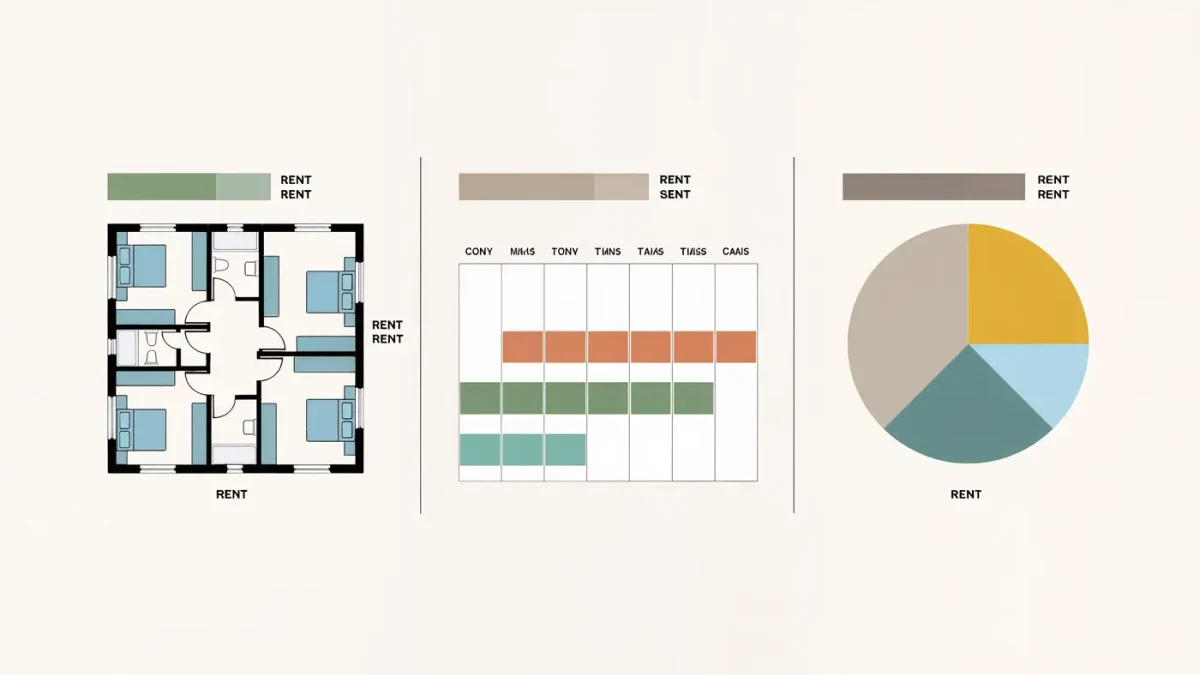
Most shared studios run on three documents: the master lease, a co-tenancy agreement between the artists, and a payment trail with one collector and receipts. The split itself comes down to square footage, schedule or a blend. The model scales from two friends in a garage to whole floors like the Elizabeth Foundation for the Arts studios in Hell's Kitchen.
Sharing is the default economics of a working practice in this city. Studio rent is the largest recurring cost most artists carry, and splitting it does more for a budget than any single grant; it also converts space one person uses ten hours a week into productive square footage for four. Done casually, sharing breeds resentment and legal exposure. Done on paper, it is one of the oldest mutual-aid institutions New York artists ever built for themselves — older than any studio program, and still the most common.
Why do artists share studios in New York?
Because rent is the biggest recurring cost in a working practice, and sharing is the fastest way to cut it. A floor too large for one painter becomes affordable for four. Shared studios also spread equipment costs, keep late-night work safer, and rebuild the daily critique circle that art school ends at graduation.
The pull is social as much as financial. Isolation is the quiet tax of a solo studio; a shared floor keeps conversations about materials, opportunities and deadlines running in the background, and it puts four networks of gallery contacts within shouting distance instead of one. The bonus is discipline — nobody slacks on their studio day when three other people are paying for the room and showing up.
How do shared studios split the rent fairly?
Three ways, used alone or blended: by square footage, where each artist pays for the actual footprint they command; by schedule, where a wall or desk used two days a week costs proportionally less; and flat equal shares, which quietly subsidize whoever occupies the best corner. Fairness usually means measuring.
The measuring is not complicated. Walk the space with a tape, count private zones at their true area, then split the shared core — sink, kitchenette, media bay, tool corner — evenly across everyone. A sculptor whose craters eat the common floor should pay for that reality; a painter who stores forty primed panels in the back pays for storage, not goodwill. Utilities ride the same logic: inside the rent if the lease says so, split by the same shares if not.
- Per square footage: measure private zones, divide the shared core evenly.
- Per schedule: bookable desks or walls priced by the day or half-week.
- Flat shares: simplest, and only fair when rooms and hours genuinely match.
- Hybrid: footage for space, schedule fee for heavy equipment time.
Whatever method wins, revisit it once a year. Practices grow, shrink and change medium; a split that was fair when everyone painted watercolors stops being fair the day someone installs a kiln.
What should a studio-sharing agreement say?
Names, shares, due dates, and the boring machinery: how the rent reaches the landlord, what happens after a late payment, how much notice a departing artist gives, how a replacement is found and approved, who owns the shared equipment, and how the deposit comes back. Two pages prevent most fights.
The structural question underneath is who holds the lease. A master-tenant arrangement — one artist on the paper, everyone else paying that person — is common and workable, but it concentrates both liability and power, and most commercial leases require the landlord's consent before subtenants move in. Co-signing spreads the obligation but entangles everyone in each other's credit. Either way, the internal agreement should mirror the lease's real terms: same notice periods, same surrender standard, no promises the master tenant cannot keep. Money moves through one collector, on a set date, with receipts — a shared account is even better — because the payment trail is what protects the group when memory disagrees.
Related stories: When a Studio Doubles as a Classroom · Why Studios Cluster in Gowanus and Maspeth.
How do shared studios handle schedules, chores and chemicals?
With a calendar, a rota and a map. Booking grids prevent three people from needing the spray corner on the same Thursday; cleaning rotations keep small resentments from calcifying into exits; and a marked chemical zone keeps solvents away from the food table and from whoever is sanding wood dry. Rules work when they stay visible.
Quiet hours deserve an actual number, not a vibe, since one artist's ambient playlist is another's migraine. Guests, studio visits and photo shoots go on the same calendar as work blocks, and key policy is security policy: a lockbox with a code everyone can recite beats four unlabeled copies floating through ex-boyfriends' coat pockets. The last shared ritual is cheap and saving: whoever leaves restores their wall to primer white, because the next person's practice — and the deposit — depends on it.
What goes wrong, and how do studios prevent it?
The classics: the friend who pays late, the breakup that splits a studio, the collector who dips into the pot, the landlord who discovers four subtenants nobody named. Every one of them has the same prevention — paper, receipts, and exit terms written while everyone still likes each other.
The quiet failures matter just as much. The artist whose career accelerates and starts crowding the floor. The roommate whose oil-soaked rags live next to the kiln. The subtenant who was never told the lease forbids teaching workshops. None of these are moral failures; they are coordination failures, and coordination is what the agreement is for. The healthiest shared studios treat the document as living — reopened whenever the people, the practices or the rent change.
Frequently asked questions
Should everyone in a shared studio be on the lease?
Not always, and co-signing carries its own entanglements. A master tenant with a written internal agreement is often cleaner, provided the lease permits subtenants or the landlord consents. Whoever signs, the group's internal paper should mirror the lease's notice periods and surrender terms exactly.
How do you split rent when studio sizes differ?
Measure and charge for footprint. Private zones are priced by actual square footage, shared infrastructure is divided evenly, and storage counts as space, not as a favor. A schedule-based fee can sit on top for equipment time. Revisit the numbers yearly, because practices change size faster than agreements do.
Can a shared studio sublet a desk to someone new?
Usually yes, but two doors need opening first: the lease, which commonly requires landlord consent for subtenants, and the co-tenancy agreement, which should already describe how replacements are found and approved. Skipping either turns a helpful sublet into a breach one certified letter can expose.
What happens when one artist leaves a shared studio?
The agreement should already say: notice period, often thirty to sixty days; rent responsibility until a replacement is found or the notice runs out; and the departing artist's share of the deposit returned after the wall comes back primer white. Groups that decided this on day one part as friends.