New York-area residencies trade selected artists time, space, and sometimes money, in exchange for an application and a commitment to show up and use it. The Lower Manhattan Cultural Council's Workspace program has lent downtown studios to artists for decades; Brooklyn hosts the International Studio and Curatorial Program and Smack Mellon; the NARS Foundation runs studios in Sunset Park. Each one is a machine for buying the scarcest art material, which is uninterrupted time.
Residencies are also an economy — application fees, relocation costs, housing scarcity — and understanding what each program covers, and what it quietly does not, is the difference between a transformative year and an expensive trophy for the CV. Art Real NY publishes information, not career or financial advice.
What do New York residencies actually cover?
A spectrum, not a package. Some provide free studio space only, expecting the artist to live in the city at their own expense. A few add stipends or honoraria, rare and coveted because unrestricted cash is rarer than wall space. Others offer live-work arrangements — the International Studio and Curatorial Program in Brooklyn houses visiting international artists — while programs like the Watermill Center on Long Island and Skowhegan, the storied Maine summer school founded in 1946, run immersive campuses far from the city's rent.
- Studio-only residencies: free workspace in exchange for presence, common across Manhattan and Brooklyn programs.
- Stipend residencies: workspace plus unrestricted funds, the rarest tier.
- Live-work residencies: housing and studio together, usually for a fixed term.
- Program residencies: structured seminars, critiques, and a final group exhibition, like the Bronx Museum's Artists in the Marketplace model.
- Summer intensives: immersive campuses such as Skowhegan, feeding New York artists out of the city for one season.
Housing is the honest catch in the New York tier: because city apartments cost what they cost, most local programs supply studios while the artist solves rent alone. Residencies that do house anyone are flooded with applications for exactly that reason, and out-of-town campuses like Skowhegan and Watermill function partly as New York artists' escape from the rent they are still paying back home.
How competitive are New York residencies, really?
Very, in the way lotteries are very: programs across the board report far more qualified applicants than places, with well-known studios receiving applications in the hundreds for a handful of spots. Acceptance rates that look like long odds are less a judgment than arithmetic. The strategic consequence is simple — no single application should carry a year's plan.
The working approach is a portfolio of applications across tiers: two or three stretch programs, several realistic regional ones, and a local studio-only residency where the odds bend toward artists who already live in the borough. Rejection letters are a subscription service, not a verdict. Artists who treat the cycle as annual routine, refining materials each round, tend to land somewhere by the second or third year — and the materials improve whether or not anyone says yes.
What goes into a strong application?
The same assets every time: a tight set of work samples, a project description that sounds like the actual work, a clean CV, references who answer email, and a statement specific to the residency's format. Application fees usually run in the tens of dollars and are waived by some programs for artists in need. Panels review in batches, quickly, so the first image and first sentence do disproportionate work.
Fit is the quiet lever. A studio-only program in Lower Manhattan wants evidence of self-directed momentum; a program residency with a final exhibition wants artists who benefit from structure and critique; a print workshop wants print thinking. Reading two years of a program's alumni lists tells an applicant more than any mission statement. The applications that succeed sound like the artist already understood the room.
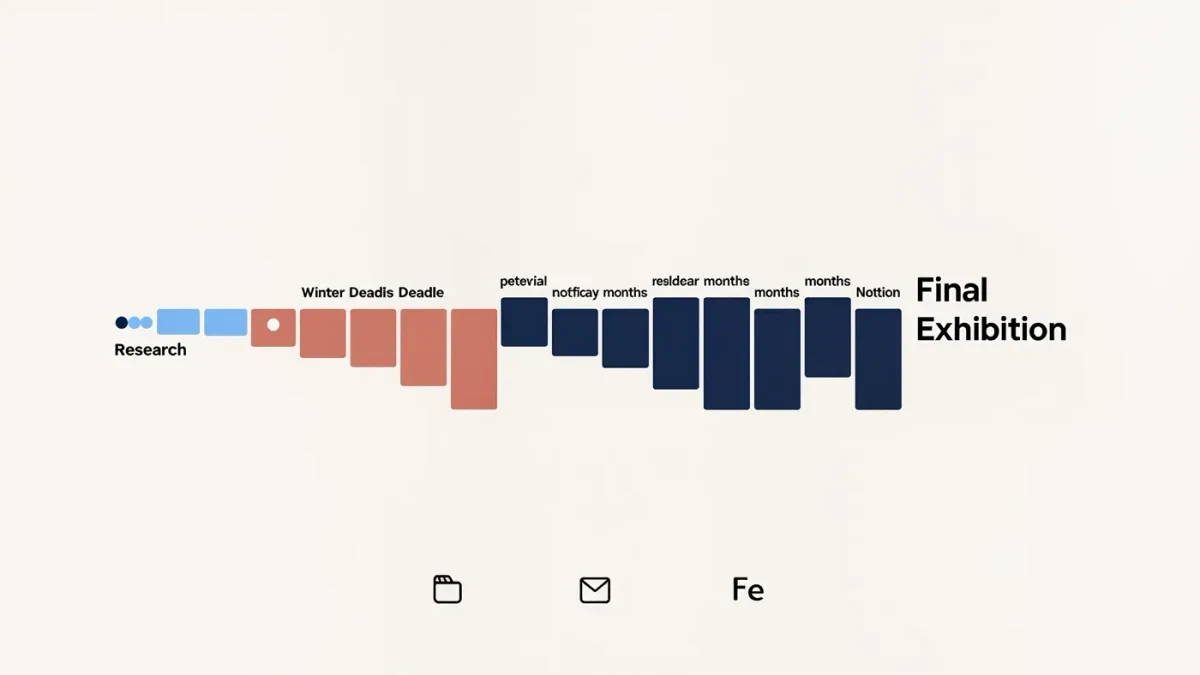
Timeliness is the least glamorous differentiator. Deadlines cluster in winter and early spring for autumn starts, and materials assembled at the last minute — hurried images, a recycled statement addressed to the wrong program — announce themselves instantly. The artists who keep a standing application kit, updated twice a year, apply to five programs in the time it takes others to assemble one.
What does a residency ask in return?
Presence, mostly. Programs expect residents to actually use the studio, appear at program events, and participate in the cohort that justifies the whole structure. Most ask for an end-of-term open studio or exhibition; some add public engagement — a talk, a workshop, a neighborhood project — as part of the deal. A few take no commission on work made during the residency; read the agreement, because policies differ and assumptions cost money.
The costs artists forget are relocation, materials, and the income paused during the term. A free studio in Manhattan saves rent on workspace, not on life; an immersive campus in Maine means subletting, packing, and a season away from the day-job networks that fund the practice. The residency is a subsidy, not a salary, and budgeting it like one is how the time stays generative instead of stressful.
Do residencies actually change careers?
Indirectly and slowly, through the two assets they manufacture: time and cohort. A year of protected making produces the body of work that applications, exhibitions, and dealers later see. The cohort — fellow residents, visiting critics, program staff — becomes a professional network that circulates names for decades; ask any group of mid-career artists where they met, and the answer is very often somebody's residency summer.
What a residency almost never does is hand anyone a gallery. The line on the CV opens doors to conversations, not contracts, and artists who arrive expecting market conversion leave disappointed. The ones who arrive with a project worth a year of focus leave with the only thing residencies reliably sell: work that would not otherwise exist, made alongside people who understand why it matters.
Frequently asked questions
Do artist residencies in New York pay artists?
Some do, most do not. The common arrangement is free studio space and program support; a smaller tier adds stipends or honoraria, and those programs receive the heaviest application volume. Housing is rarer still, since city rents constrain what programs can offer. Read each residency's terms page before budgeting the year around it.
How competitive are NYC artist residencies?
Extremely, though the odds are arithmetic rather than judgment. Well-known programs commonly report hundreds of applications for a handful of studios. Artists improve their chances by applying across tiers annually, matching applications to program fit, and refining the work-sample set each cycle rather than chasing one famous program.
What do residency applications require?
Typically eight to twenty work samples, a project or practice statement, a CV, and one or two references, plus an application fee usually in the tens of dollars. Programs with public programming often ask how the artist would engage an audience. The first image and the first sentence carry disproportionate weight with fast-moving panels.
Can artists work a day job during a residency?
Part-time and flexible work, usually yes; full-time presence-dependent jobs, rarely. Most programs require regular studio use and attendance at cohort events, which is the point of selection. Artists who cannot pause employment often choose part-time local residencies over immersive campuses, trading intensity for compatibility with the job that funds the practice.
For more context, read How Do NYC Grants for Individual Artists Actually Work?.
For more context, read artist day jobs.
For more context, read How Artists Get Into Group Shows.