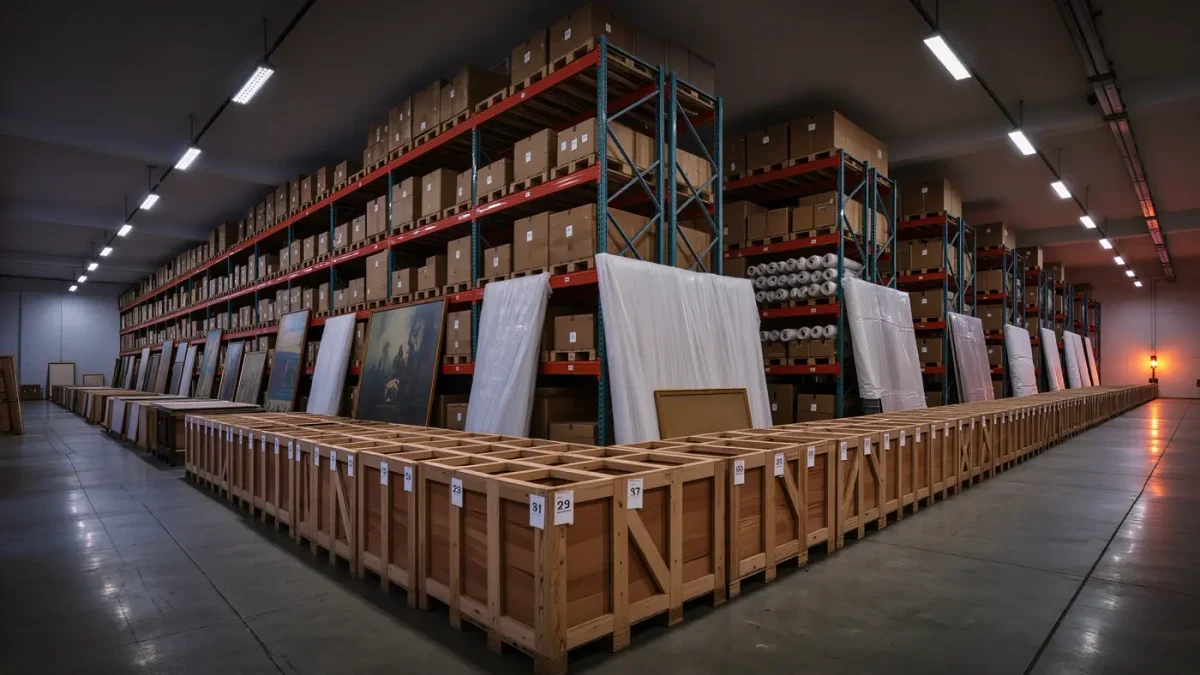
It happens on a loop. A museum discloses that it plans to sell work from its permanent collection. Headlines follow, trustee meetings follow the headlines, and someone always asks the same confused question: wait, museums can just sell the art? The answer is yes, narrowly, and the fight is always about how narrowly. The word doing the heavy lifting is deaccessioning, and understanding it is worth ten minutes of any New York artist's time — because when collections move, the money and the attention eventually reach the living.
What is deaccessioning, exactly?
It is the formal, permanent removal of a work from a museum's collection — the registrar's opposite of accessioning. A work is voted out, its legal title transferred, and it is usually then sold, most often at auction. The transaction closes a public trust and opens a private one, which is why the process carries more ceremony, and more paperwork, than any gallery sale.
The ceremony is the point. A collection is not storage; it is a promise that certain objects are held for the public in perpetuity-ish. Breaking that promise requires layers of internal approval — curatorial sign-off, director review, committee votes, and finally trustees — plus published justification. Museums that treat those steps as red tape tend to meet the press.
What are the actual rules?
Professional guidelines are strikingly blunt. The College Art Association's standards, first adopted in 1973 and revised in 2013 and 2023, state that sale proceeds, including earnings and appreciation, may only be used for acquisition of artworks or for direct care of collections, and may not support operating expenses or building funds. Deaccessions should follow a comprehensive collecting plan, should never be prompted by market fluctuations or a collector's expression of interest, and deaccessioning works by living artists should be avoided, if possible.
Read those clauses again with an artist's eyes. The proceeds rule forbids a museum from rescuing its payroll with its collection. The market-fluctuation clause forbids timing sales to hot prices. And the living-artists clause is a quiet shield: the sector's own standards tell museums not to dump work by people who are still alive, still working, and still watching what their institutions do with their reputation.
Transparency rules matter just as much. Planned deaccessions, per the guidelines, must be publicized in appropriate local or regional media, completed ones announced on the institution's website, and full records kept open to public scrutiny. Every deaccessioning scandal that has ever stuck — and several have — stuck because an institution treated disclosure as optional.
Why would a museum risk the headlines?
Because the money is real and the allowed uses are genuinely useful. Proceeds can buy new work — often the only route to a major acquisition in an era of thin endowments — or fund the conservation that keeps aging collections displayable. For a museum sitting on duplicates, works outside its collecting plan, or objects it cannot store properly, a disciplined sale is a legitimate collection-care tool, not a fire sale.
The risk is the slope, not the act. Once a work becomes a number that solves a problem, the next problem starts looking solvable the same way. Directors know this; trustees sometimes know it less. The guidelines exist precisely because the temptation recurs on a schedule of its own — usually a budget crisis, always an argument that this time is different.
The pressure is not abstract in New York, where operating costs rise every year and endowment income does not. When a shortfall arrives, everything restricted — salaries, buildings, programming — stays restricted, and the collection can start to look like the only liquid asset in the building. That is precisely the moment the guidelines exist for: the rules are not anti-museum. They are the sector telling itself, in writing, that the collection is not a reserve fund, because the day it becomes one, every donor agreement in the archive is renegotiated by implication.
What happened in New York's backyard?
The cautionary anthology is short and instructive. In October 2020, the Brooklyn Museum and the Baltimore Museum of Art both consigned collection works to Sotheby's — and, as the New York Times put it at the time, only one of them caught grief. The Baltimore museum paused its sale of three Brice Marden paintings amid backlash, per Baltimore Magazine's account of the episode, while the Brooklyn sale proceeded with less lasting damage.
New York's own recent chapter was quieter. In 2023, the Whitney Museum of American Art deaccessioned and sold an Edward Hopper painting — its first deaccession since 2018, per the art-market explainer site MyArtBroker — a routine enough transaction that it passed without scandal, precisely because it followed the process in public.
That contrast is the whole syllabus. Same mechanism, similar institutions, opposite outcomes — the difference was justification, disclosure, and whether the sale read as stewardship or as distress. Museums that do the paperwork in daylight keep the public's benefit of the doubt. Museums that do it in the dark spend years buying it back.
What do the fights do to giving?
They make donors pickier, fast. Collectors who considered a gift start asking whether the museum might someday sell it, and lawyers start writing sharper restrictions into deeds — no-sale clauses, display commitments, credit requirements. Every restriction narrows what a museum can do with future space and money, which is why one institution's sloppy deaccession can quietly cost several others their next bequest.
For living artists, that chill reaches the studio directly. Much of what enters New York collections arrives as gifts, not purchases, and the appetite for giving is sensitive to how institutions have treated what they were given. A museum sector that looks like a responsible custodian keeps the pipeline open. One that looks like a patient seller watches it narrow.
Why should working artists care?
Two reasons, one hopeful and one defensive. The hopeful one: acquisitions are an allowed use of deaccession proceeds, which means money unlocked from the dead can be spent on the living — a museum selling a duplicate bronze to buy work by a mid-career painter is transferring institutional faith, and institutional cash, toward people still paying studio rent.
The defensive one: reputation flows both ways. When a museum sells a living artist's work, it tells every collector, dealer, and appraiser that the institution's conviction has an expiration date — the standards advise avoiding it for exactly that reason. And when deaccessioning scandals erode public trust, donors tighten up across the board, and the acquisitions budgets that reach living artists shrink first. Artists have a stake in collections staying boringly, transparently permanent.
What should artists actually watch for?
The announcements. Because planned deaccessions must be publicized in advance, the paper trail appears before the sale does — usually in local press, always eventually on the museum's website. When a New York institution lists works by living artists, artists and their dealers should notice; when a sale funds acquisitions, it is worth watching what gets bought next. The permanent collection is the art history under construction. The construction reports are public.
For more context, read How Museum Acquisitions Really Work in NYC.
For more context, read How New York City Actually Hands Out Public Art Commissions.
For more context, read Queens Museum Names Debra Wimpfheimer Director.